Chronic autoimmune skin diseases, such as psoriasis, develop at an increased rate due to increased growth of skin cells; layers will eventually develop on the surface of the skin as inflammation occurs due to chronic skin cells and their growth. The modern-day treatments for psoriasis include topical corticosteroids, systemic immunosuppressive agents and biologics; however, these prescriptions are costly and have adverse effects and side effects. Ayurveda utilizes an all-natural, holistic approach towards healing psoriasis; primarily, ayurvedic practitioners will identify and address the causes of psoriasis, leading to long-term healing via dietary and lifestyle modification with the use of detoxification and herbal remedies.
Ayurvedic Treatment for Psoriasis in Hyderabad
An Ayurveda Perspective On Psoriasis
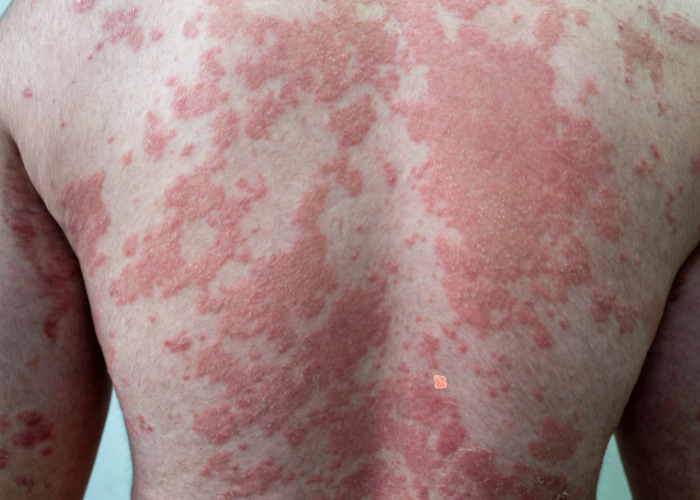
Skin cells grow very rapidly in those affected by psoriasis, which results in a thickened layer of skin (plaque) being formed. People can be affected by psoriasis in multiple ways; Plaque, Guttate, Inverse, Pustular, and Scalp psoriasis are just a few examples of this very difficult-to-manage disease. Common symptoms include red patches with white scale, dry skin, cracked skin, itching, and psoriatic arthritis, which may cause joint pain. When psoriasis is located on the scalp, there are additional symptoms of flaking, redness and itching.
In Ayurvedic terminology, psoriasis is often referred to as Kitibha Kushtha or Ekakushta. The main cause of psoriasis is an imbalance of Kapha and Vata doshas, which can be triggered by: a variety of factors, but usually leading to the creation of Agni (toxic waste), imbalance of key body tissues (Rasa (plasma) and Rakta (blood)), derangement of the doshas throughout the body, and accumulation of Ama (toxins) due to poor digestion. All of this contributes towards the formation of Ama (toxic waste) in the body. Ama will then block the body’s channels known as Srotas, thereby causing internal chronic inflammation and ultimately resulting in the external manifestation of that inflammation as skin diseases. Due to this, Ayurveda seeks to resolve the cause of the disease by rectifying both the underlying cause and then promoting detoxification and enhancement of the immune system and inflammatory response via a holistic and multi-faceted approach to treatment.
The Ayurvedic Description of Psoriasis
According to traditional Ayurveda, Psoriasis is associated with the condition known as Kitibha (skin), which is classified as one of the types of “kshudra kushta” (minor skin diseases). It is thought that the primary causative factor of Psoriasis is a Vata and Kapha dosha imbalance, though Pitta dosha can also play a role in this disease’s manifestation.
The role each dosha plays in the manifestation of Psoriasis depends upon their qualities:
Vata: Governs the movement of the body, including the nervous system. When Vata is aggravated, the skin becomes dry, flaky and itchy due to lack of moisture.
Kapha: Governs the stability, heaviness, and moisture of the body. When there is an imbalanced Kapha dosha, the skin will thicken and scale off.
Pitta: Governs the metabolic processes of the body and produces heat. When Pitta is present, the skin may become inflamed, red, and burning in nature.
Ayurveda believes that improper digestion causes Ama (toxins). Toxins bathe in your body and imbalance your doshas, leading to the skin disorder (psoriasis). It is also believed that unhealthy eating, stress, and environmental factors exacerbate the condition by further irritating the body.
Pathogenesis of Psoriasis in Ayurveda
Ayurveda describes the process of developing the disease psoriasis in three phases, with the first being:
Weak Digestion (Agni Dushti): At the start of the disease psoriasis, the person has an imbalance in their digestive fire (Agni), resulting in the production of Ama or undigested material, which travels throughout the body and eventually settles into the deeper layers of the body’s tissues, including the skin.
Dosha Imbalance: Over time, the build-up of Ama creates an imbalance of the Doshas (Vata and Kapha). With an imbalance of the Doshas, symptoms that are due to Vata (dry, scaly skin patches) and Kapha (thickening of the skin) will appear.
Involvement of Blood (Rakta Dushti): With Skin. Finally, getting rid of accumulated Ama through the next cycles will result in Rakta Dushti, as vitiated blood will show up as skin lesions, changes in the color of the skin, and/or itching sensations in the skin.
Ayurvedic Treatment for Psoriasis
Ayurvedic treatment for psoriasis is based on three main things: detoxifying the body, rebalancing the doshas, and restoring healthy skin through a holistic approach. This involves not only treatments inside and outside the body, but also dietary changes and changes to your lifestyle as well.
Detoxification Therapies (Panchakarma)
One of the most important aspects of Ayurvedic treatment is Panchakarma (detoxification). Panchakarma consists of five different types of therapy that work together to help eliminate all the toxins in the body and restore balance to the doshas.
Vamana (Therapeutic Emesis) Is a therapy that uses induced vomiting to eliminate all toxins from both the stomach and upper GI tract. It is particularly useful for clearing excess kapha and decreasing toxins in the entire body.
Therapeutic purgation (Virechana) is done by using laxatives to help remove toxins from the body via the intestines. This treatment is effective at cleansing the liver, decreasing pitta, and purifying the blood by eliminating toxins.
Basti (medicated enema) therapy is used to help remove excess vata imbalances in order to purify the body. The way that Basti helps cleanse the colon and eliminate deep-seated toxins from the body is by infusing an herbal decoction or herbal oil into the rectum.
Raktamokshana (bloodletting) may be necessary if rakta dushti is present, where bloodletting or using leeches can be used to purify blood from toxins and decrease inflammation.
Herbal Treatments
Ayurvedic herbal medicines have an essential role in the management of psoriasis through the balancing of doshas (body types) as well as the strengthening of the skin. A few examples of common herbal products and their usage in psoriasis include:
Khadira (Acacia catechu) – Khadira works to purify the blood, one of the factors involved in chronic skin diseases such as psoriasis, by cleansing the blood and decreasing the Ama and the Kapha dosha.
Neem (Azadirachta indica) – Known for its strong anti-inflammatory and anti-bacterial effects, neem is often utilized in both treating psoriasis and other chronic skin conditions. Neem will also help to detoxify the blood, reduce itching and redness, and aid in the regeneration of healthy skin.
Turmeric (Curcuma longa) – Curcumin, found in turmeric, is one of nature’s most potent anti-inflammatory agents. It helps to reduce inflammation and irritation associated with psoriasis. Additionally, it assists in the detoxification of the liver and the enhancement of digestion, both of which reduce Ama.
Manjistha (Rubia cordifolia) – Manjistha is an effective blood purifier and is traditionally used for treating chronic skin disorders like psoriasis. Manjistha helps to balance both the Pitta and Kapha doshas while promoting and facilitating the healing of the skin.
Aloe Vera: Aloe Vera is a cooling and soothing herb that helps alleviate Pitta issues. It can help to quell inflammation caused by Pitta when applied topically (using kumari gel topically) on irritated skin. Applying kumari topically can also reduce dryness, itchiness, and irritation.
Internal Medications
Ayurveda employs internal remedies for dosha balancing, blood purification, and enhancing digestive function.
Commonly used internal Ayurvedic medicines in general consist of:
Arogyavardhini Vati: This is an ancient Ayurvedic compound used to help with skin diseases such as psoriasis successfully. It helps to improve liver health, remove toxins from the body, and enhance the appearance of the skin.
Panchatikta Ghrita: This is a preparation of medicated butter made with five different bitter herbs that can have a positive effect on calming pitta and detoxifying the skin.
Mahamanjishtadi Kwath: This is a preparation of manjistha (a form of licorice) and a variety of other herbs that helps to purify the blood and is helpful with treating skin inflammation related to psoriasis.
External Treatments and Therapies
Ayurveda uses external therapies to alleviate inflammation, itching, and assist in healing skin injuries. There are a variety of external treatments in Ayurveda, including the following:
Thakradhara (Medicated buttermilk): This Ayurvedic therapy treats excessive Pitta manifested in the skin, for example, psoriasis, through the continual pouring of medicated buttermilk onto a person’s body or head. It has a cooling and serene effect on a person, providing relief from inflammation, redness, and burning sensations.
Lepa (Herbal pastes): Many herbal pastes made of neem, turmeric, and sandalwood are used in treating annoying skin problems by applying them to the affected areas to reduce scaling, redness, and itching.
Taila (Medicated oil): Several Ayurvedic oils, such as Khadiradi Taila and Eladi Taila, are used externally on treated areas to alleviate inflammation and moisturize the skin. They each contain a unique formula of herbs with anti-inflammatory and healing properties.
Takra Lepa: This therapy uses a mixture of Takra (buttermilk) and other herbs into a paste that is applied to the affected skin areas. This type of treatment provides a cooling effect on skin irritations from psoriasis.
Recommendations for Diet and Lifestyle
Ayurveda emphasizes certain aspects of diet and lifestyle as being essential to the successful treatment of psoriasis. Ayurveda places high value on following a dietary regimen that will balance the doshas and avoid the consumption of foods that create Ama (toxins). Here are the general guidelines for dietary recommendations:
Foods to Pacify Vata: Include warm, oily (unctuous), and easy-to-digest foods like soup, stew, ghee, and cooked vegetables.
Foods to Avoid that Aggravate: Patients should avoid spicy, oily, processed, and fermented foods to avoid aggravating Pitta and Kapha.
Foods to Include that are Bitter: Include foods and/or herbs that are bitter (such as bitter gourd and neem) to help detoxify the body and cleanse the blood.
Hydration: Use herbal teas and warm water for proper hydration in order to facilitate detoxification and hydrate the skin.
Conclusion
The ayurvedic approach to psoriasis treatment is more natural and holistic as it considers the root cause of the disease, which is the accumulation of toxins known as Ama, and the imbalance of doshas. As a result, detoxification of the organism, cleansing of the digestive system, as well as dosha balance is attained, and as a consequence of all this, healthy skin is restored. Such a comprehensive combination of Panchakarma detox therapy, herbs, and external applications, along with proper nutrition and a healthy lifestyle, provides effective and lasting relief of the patient’s condition.
The major advantage of Ayurvedic treatments is their personalized character, as they involve taking into account the Prakriti of each patient, the stage of the disease, and the participation of doshas.